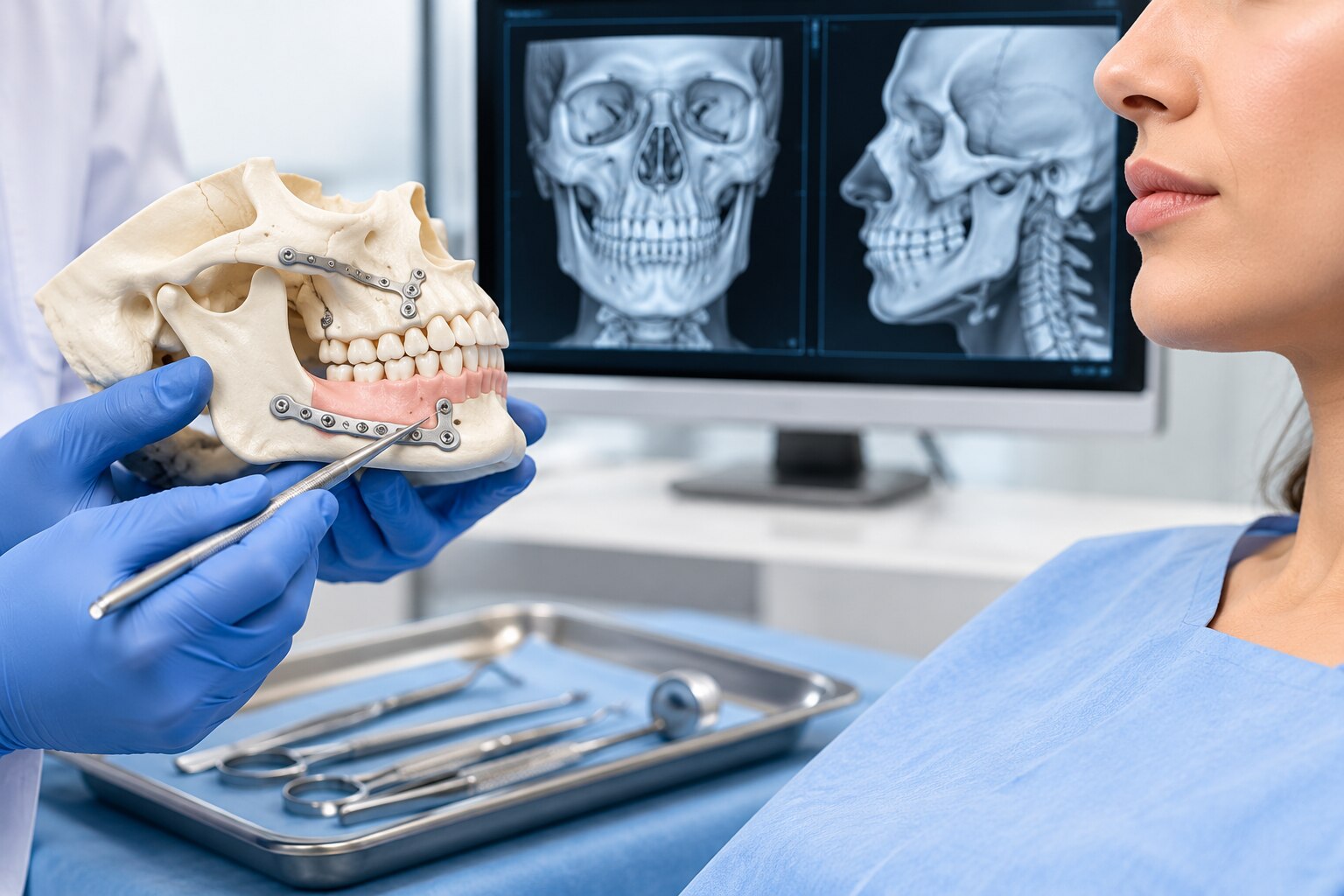
Jaw position, facial injury, impacted teeth, cysts and airway obstruction require different types of treatment, and surgery is not automatically the best answer for every complaint. By the end, you will know which conditions may benefit, how jaw surgery differs from other specialties, what assessment involves and which risks to discuss before choosing care.
Key takeaways
- Jaw surgery can improve chewing, speech, breathing and facial balance.
- Choose an oral and maxillofacial surgeon for bone, jaw and facial conditions.
- Expect scans, dental planning, blood tests and recovery instructions before surgery.
- Weigh infection, bleeding, nerve changes, relapse and anaesthesia risks with your surgeon.
Which jaw and facial conditions can benefit from maxillofacial surgery?
Surgery is useful when a structural problem prevents normal function, causes disease, or cannot be corrected safely with medication, dental treatment or orthodontics alone. Oral and facial surgery covers much more than wisdom-tooth removal.
| Condition | When surgery is useful | Main purpose |
|---|---|---|
| Jaw misalignment or malocclusion | Upper and lower teeth do not meet properly after growth, and orthodontics alone cannot correct the skeletal mismatch | Improve bite and jaw position |
| Impacted teeth | A tooth is trapped, infected, damaging a neighbouring root, or associated with a cyst | Remove the tooth and protect surrounding tissue |
| Facial fracture | A broken cheekbone, jaw, eye socket or nose is displaced, unstable, or affecting vision, breathing or bite | Restore alignment and facial support |
| Jaw cysts, tumours or other oral pathology | Imaging or biopsy identifies a lesion requiring removal or a definitive diagnosis | Remove abnormal tissue and reconstruct affected areas |
| Temporomandibular joint disorder | The joint has ankylosis, severe structural damage, repeated dislocation or persistent mechanical restriction after non-surgical care | Restore movement or reduce joint damage |
| Congenital facial difference | Jaw or facial growth developed asymmetrically or incompletely | Improve structure, function and facial balance |
| Sleep apnoea linked to jaw position | Airway assessment shows that recessed jaws contribute to obstruction | Advance the jaws to enlarge the airway |
The main jaw surgery benefits depend on the diagnosis: better chewing, a stable bite, repaired trauma or removal of disease. Facial appearance can improve, but surgery does not guarantee symmetry or cure every pain, breathing or dental problem; planning with imaging and the right specialist determines whether the expected gain justifies the risks.
What functional improvements can jaw surgery provide?
Corrective jaw surgery can improve function by repositioning the upper or lower jaw so the teeth, muscles and airway work together more effectively. These jaw surgery benefits depend on the underlying bone position, the operation planned and coordinated orthodontic treatment.
- Chewing: A better-fitting bite distributes force more evenly, making it easier to bite and grind food and reducing damaging contact between teeth.
- Speech: Correcting jaw position can improve articulation when the skeletal discrepancy affects tongue space or lip movement. Speech does not automatically become clear after surgery.
- Dental hygiene: Straighter, better-aligned dental arches can make brushing and flossing easier, although orthodontic finishing and daily technique still matter.
- Facial balance: Moving the jaws can reduce a pronounced overbite, underbite or asymmetry and create more proportional facial contours. The result is functional correction first, not a guaranteed cosmetic outcome.
- Airway function: Maxillomandibular advancement can enlarge the upper airway in selected people whose obstructive sleep apnoea is partly caused by jaw structure. Airway assessment is essential; cosmetic facial surgery is not an automatic sleep-apnoea cure.
Surgery cannot guarantee perfect chewing, normal speech, painless jaw joints, facial symmetry or permanent airway improvement. Temporomandibular joint pain, clicking and headaches have multiple causes, so jaw surgery is not a universal treatment for them. Numbness, relapse, bite changes and the need for further orthodontic care also belong in the decision.
How do you know which specialist and treatment you need?
A search for maxillofacial surgeon dombivli is only a starting point. Match the specialist to the body part, urgency and procedure; oral and facial surgery covers far more than wisdom-tooth removal.
| Specialist | Main role | Choose this route when |
|---|---|---|
| Maxillofacial surgeon | Operates on the mouth, jaws, face and neck | You need jaw realignment, facial-fracture repair, cyst or tumour treatment, complex infection care, reconstruction or surgery for jaw-related airway obstruction |
| Dentist | Prevents and treats tooth and gum disease | The problem is decay, routine extraction, fillings, gum disease or a straightforward dental infection |
| Orthodontist | Moves teeth and coordinates the bite | Teeth need braces or aligners before or after corrective jaw surgery |
| ENT specialist | Treats the ear, nose, throat and upper airway | Nasal blockage, tonsils, sinus disease or airway disease is the main cause |
| Neurosurgeon | Operates on the brain, spinal cord and central skull base | The injury or lesion involves the brain, nerves or skull base |
| Cosmetic plastic surgeon | Changes appearance and repairs soft tissue | The goal is primarily facial skin, nose, eyelid, contour or soft-tissue reconstruction |
| Emergency department | Provides immediate assessment and stabilisation | Severe bleeding, breathing difficulty, major facial trauma, loss of consciousness or rapidly spreading infection needs urgent care |
For planned surgery, ask who holds credentials and hospital privileges for the proposed operation, who gives anaesthesia, whether orthodontic and imaging teams are involved, and how complications and follow-up are handled. Verify that the facility provides the needed inpatient care, intensive care, blood-bank support or trauma coverage; a hospital label alone does not guarantee them.
What tests and preparation are needed before surgery?
Planning starts with a clinical examination of your bite, jaw movement, facial symmetry, teeth, gums, airway and nerve function. The surgeon reviews your medical history, medicines, allergies, smoking status and previous anaesthetic problems before deciding whether surgery is appropriate.
- Bring recent dental records and list every medicine, including blood thinners and supplements.
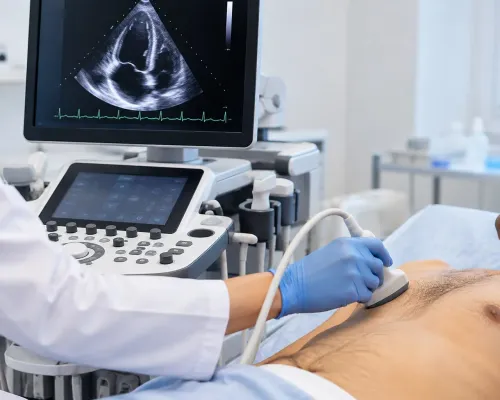
- Expect panoramic dental X-rays and lateral or frontal cephalometric X-rays to show jaw relationships. A cone-beam CT scan may be needed for impacted teeth, asymmetry, bone defects, fractures or airway planning.
- Digital dental scans or plaster models, facial photographs and bite records help the surgeon simulate movements and plan plates, screws or grafts.
- Blood tests, pregnancy testing when relevant, an ECG or other anaesthesia assessment are ordered according to your age, health and operation. Ask who provides anaesthesia, where you will recover, and how bleeding, infection or airway problems are handled.
Orthodontics belongs in the plan when teeth are crowded, tilted or compensating for an incorrect jaw position. Braces or aligners before surgery usually “decompensate” the teeth so the jaws can be positioned accurately; orthodontics continues afterward to refine the bite. Surgery-first planning suits selected patients, not everyone.
When comparing maxillofacial surgery benefits Dombivli or a facial surgery hospital in Dombivli East, confirm imaging, inpatient beds, intensive-care and blood-bank access, trauma cover, orthodontic coordination and follow-up. Aurindam Hospital is one facility to ask about these arrangements rather than assuming its hospital label describes every service.
Related service
Maxillofacial Surgery (short for Oral and Maxillofacial Surgery) is a specialized field of surgery that focuses on the face, jaw, mouth, and neck. View service → |
What happens during recovery, and what risks should you weigh?
Swelling, bruising, pain, restricted mouth opening and difficulty eating are normal early effects after jaw or facial surgery. Plan for a liquid or soft diet, prescribed pain relief, careful mouth cleaning and several follow-up visits. Recovery time depends on the operation; immediate recovery is not a realistic promise.
| Issue | What to expect | What consent should cover |
|---|---|---|
| Infection or bleeding | Worsening pain, fever, foul drainage or persistent bleeding needs prompt review | Antibiotics, drainage, hospital treatment or rarely another procedure |
| Numbness | Lower-jaw surgery can alter sensation in the lower lip, chin or tongue | Temporary or lasting numbness, tingling or altered sensation |
| Teeth and bite | Teeth or roots can be injured, and the bite can feel different during healing | Dental treatment, orthodontic adjustment or further surgery |
| Jaw position | Bones can shift or the original problem can return | Relapse, delayed healing and the possibility of revision surgery |
Before choosing a maxillofacial surgeon in Dombivli, ask who provides anaesthesia, which hospital privileges apply and who manages complications after discharge. Confirm that the facial surgery hospital in Dombivli East has the required imaging, inpatient monitoring, blood-bank support, intensive care and on-call specialists for your operation; outpatient dental facilities are not equivalent.
Ask how follow-up works if numbness, infection, breathing problems or uncontrolled bleeding develops. For sleep apnoea, airway assessment must guide the operation: jaw advancement can help selected patients, but facial surgery is not an automatic cure.
Frequently asked questions
Which jaw and facial conditions can benefit from maxillofacial surgery?
Treatment can address jaw misalignment, facial fractures, severe facial injuries, jaw cysts or tumours, impacted teeth and selected conditions affecting chewing, speech or breathing.
What functional improvements can jaw surgery provide?
Correcting jaw position can improve bite alignment, chewing, speech, swallowing and facial symmetry. Surgery for selected airway problems can also support breathing.
How do you know which specialist and treatment you need?
An oral and maxillofacial surgeon evaluates bone, teeth, nerves and soft tissue. Orthodontists, ENT specialists, dentists or plastic surgeons join the plan when their expertise is needed.
What tests and preparation are needed before surgery?
Preparation can include dental examination, photographs, X-rays or CT scans, blood tests, medical review and a discussion of medicines, smoking, fasting and anaesthesia.
What happens during recovery, and what risks should you weigh?
Recovery often includes swelling, restricted chewing, pain control and follow-up appointments. Discuss bleeding, infection, nerve changes, bite problems, anaesthesia complications and the possibility of further treatment.
Keywords