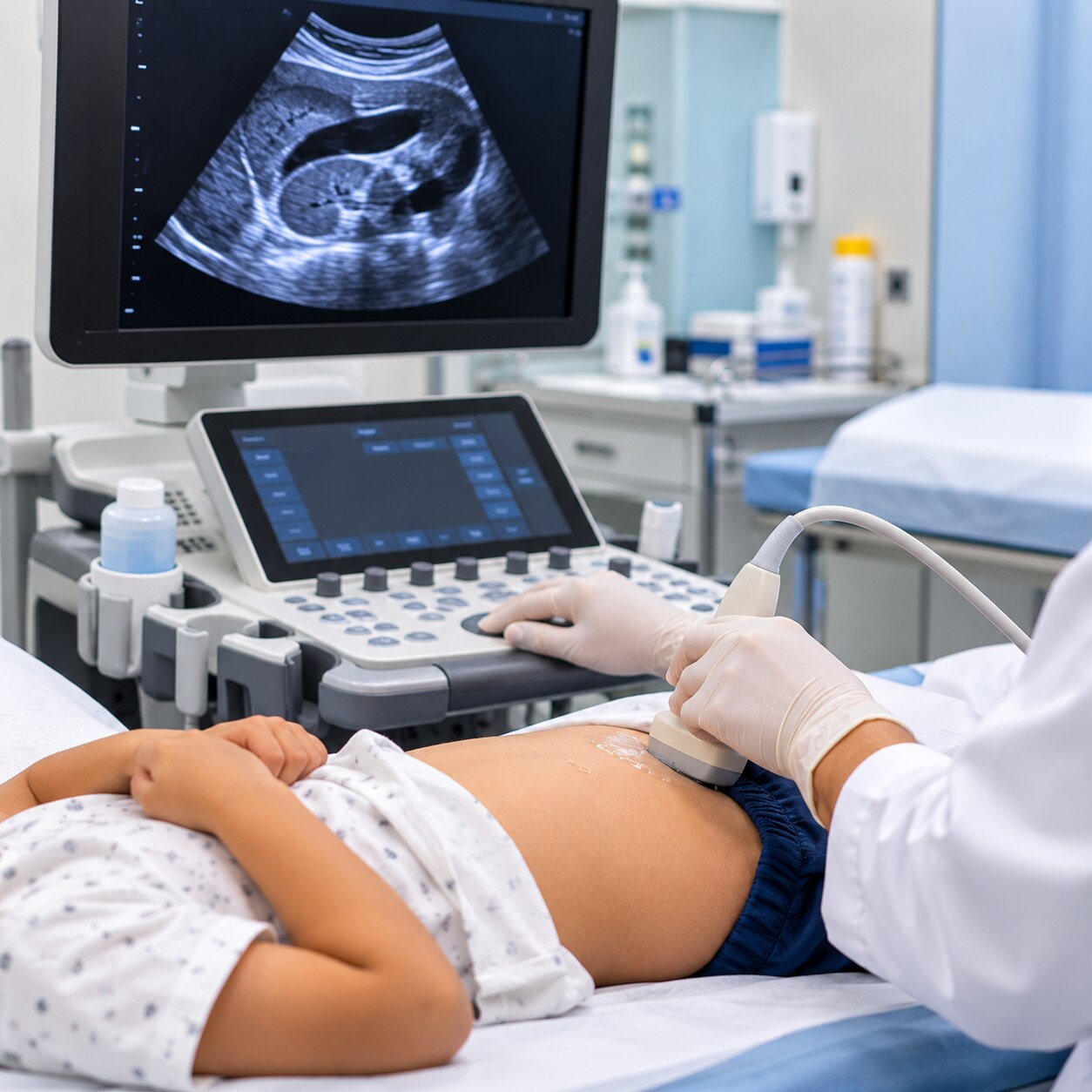
A scan should be chosen for the clinical question, not because one test sounds safer, cheaper or more familiar. By matching symptoms, body area, urgency and preparation requirements to the right modality, you can discuss a more useful referral and avoid delays caused by an unsuitable examination.
Key takeaways
- Ultrasound uses sound waves; X-ray and CT use ionising radiation.
- Choose imaging by body area, suspected condition and the doctor’s clinical question.
- Ask about preparation, scan time, contrast dye and when the report will arrive.
- Compare Dombivli centres by equipment, radiologist expertise, emergency access and report clarity.
What does radiology include, and where does ultrasound fit?
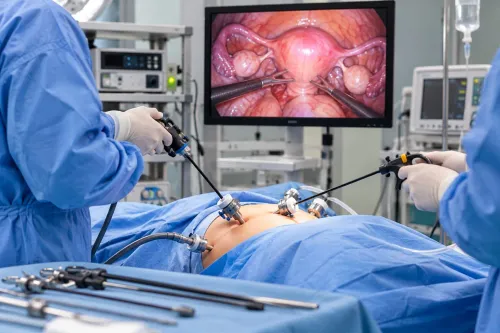
Radiology is the broader medical-imaging service, not a single scan. It can include X-ray, computed tomography (CT), magnetic resonance imaging (MRI), ultrasound and image-guided procedures. Ultrasound is one modality within radiology: it creates images with high-frequency sound waves and does not use ionising radiation.
| Modality | What it uses | Common reason for choosing it |
|---|---|---|
| X-ray | Ionising radiation | Fractures and some chest problems |
| CT | X-rays processed into cross-sectional images | Trauma, internal bleeding, lungs and detailed bone or organ assessment |
| MRI | Magnetic fields and radio waves | Brain, spine, joints and complex soft-tissue injuries |
| Ultrasound | High-frequency sound waves | Gallbladder, pelvic organs, pregnancy, superficial tissues and blood flow |
Your referring doctor should select the examination that answers the suspected clinical problem. Ultrasound is not automatically the safer or better choice: gas can block its view, and bone prevents it from assessing structures behind it.
A leg swelling that raises concern for deep-vein thrombosis needs a compression duplex ultrasound, not a general abdominal scan or X-ray.
When comparing radiology services dombivli or medical imaging dombivli, confirm that the requested modality is available and that a qualified radiologist will interpret the images. Give the facility the exact clinical question, because a vague referral can produce a report that cannot address what your doctor needs to know.
Which scan matches your symptom or body area?
The suspected problem matters more than the scan’s name. Use the following as a starting guide, then follow the clinician’s request; choosing an unsuitable test can delay treatment.
| Option | Best match | Important limitation |
|---|---|---|
| X-ray | Suspected fracture, chest pain or breathlessness, and an initial look at bones or lungs | It can miss stress fractures, soft-tissue injuries and early lung disease |
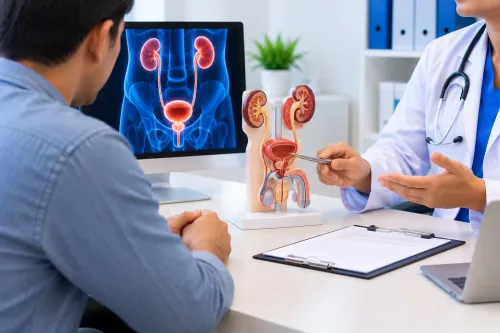
| Ultrasound | Gallstones, abdominal or pelvic symptoms, urinary symptoms, pregnancy, soft-tissue lumps, and compression duplex for suspected leg-vein thrombosis | Gas, bone and deep structures can block the view; a general ultrasound is not a substitute for a vascular duplex |
| CT | Major trauma, suspected internal bleeding, appendicitis, bowel disease, complicated infection, lung problems, urinary stones and complex fractures | It uses ionising radiation and contrast may require kidney or allergy screening |
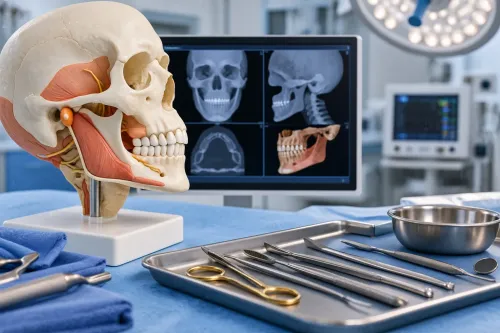
| MRI | Ligament, tendon, muscle, spinal or occult-bone injury, and detailed brain assessment after initial stroke imaging | It takes longer and requires screening for certain implanted devices or metal |
For sudden weakness, facial drooping, speech difficulty or severe head injury, go to emergency care: CT is commonly used quickly for bleeding and trauma, with MRI added when the clinical team needs greater detail. A normal ultrasound does not exclude every cause of abdominal pain.
For an ultrasound scan in Dombivli East, confirm whether the appointment is diagnostic, pregnancy-related or a compression duplex study. A search for radiology or ultrasound Dombivli should not replace checking the clinical question and the interpreter’s report.
What preparation, discomfort and time should you expect?
Preparation depends on the body area and whether contrast is used, so follow the facility’s written instructions rather than a generic ultrasound rule. For an ultrasound scan in Dombivli East, ask whether you need fasting for an abdominal study or a full bladder for a pelvic or urinary study.
Do not stop medicines unless the imaging team or prescribing doctor tells you to.
| Examination | Preparation and workflow | Discomfort and time |
|---|---|---|
| Ultrasound | Lie on your back or side while gel is applied; you may hold your breath briefly. | The probe may press on a tender area; usually 15–30 minutes. |
| X-ray | Remove jewellery, metal objects and clothing covering the area; tell staff if you are pregnant. | Painless positioning; usually a few minutes. |
| CT | Tell staff about kidney disease, pregnancy, previous contrast reactions and medicines. Iodinated contrast may require a cannula. | A warm flush or metallic taste can occur; scanning takes about 10–30 minutes. |
| MRI | Remove metal, cards and electronic devices. Report implants, clips, pumps or hearing devices before entering the scanner. | Loud sounds and a confined space; expect about 20–60 minutes, with breath-holding for some sequences. |
A routine appointment follows the preparation plan and may be delayed if your bladder is not full or fasting was missed. Urgent imaging for trauma, severe pain, suspected stroke or internal bleeding takes priority; do not delay emergency care to fast or arrange a routine slot.
Contrast examinations take longer because screening, cannula placement and observation are added.
How should you compare imaging options in Dombivli?
A low price does not prove that a provider offers the scan your doctor requested. Compare the exact modality, reporting process and follow-up access before booking radiology services Dombivli.
| Option | Verify before booking | Why it matters |
|---|---|---|
| X-ray, CT or MRI | Confirm the exact body part and protocol | “Scan” alone can mean the wrong examination |
| Diagnostic ultrasound | Ask who performs and interprets it, and whether the report states the indication and limitations | A technically limited image can miss the clinical question |
| Pregnancy ultrasound | Confirm that it is a pregnancy examination and ask what information it covers | It is not interchangeable with every diagnostic ultrasound; prenatal sex selection or disclosure is prohibited under Indian law |
| Any urgent study | Ask how critical findings reach the referring doctor | A serious result must not wait unnoticed in a portal |
Ask for a report signed by an appropriately trained radiologist or other suitably qualified practitioner, with findings, impression and limitations. Ask whether the facility can release prior images and reports in a usable format so the reader can compare change rather than start from zero.
Give the provider the doctor’s specific question: “Could this be appendicitis?” is more useful than “abdominal pain.” Aurindam Hospital is one place to ask whether the requested examination, interpretation and clinician communication are available together.
For a radiology hospital near Dombivli or medical imaging Dombivli, choose the service that can answer that question, not the one with the broadest name.
Related services
Radiology & Ultrasonography Radiology & Ultrasonography are key branches of medical imaging used to diagnose and sometimes treat diseases inside the body: 1. View service → |
Ultrasonography Ultrasonography also known as ultrasound, is a non-invasive medical imaging technique that uses high-frequency sound waves to create images of the inside of the... |
How do radiation, contrast and the final report affect the decision?
A scan with contrast is a different examination, not a sharper version of the same scan. CT contrast is usually iodinated; MRI contrast is usually gadolinium-based. Tell the imaging team about:
- A previous contrast reaction
- Kidney disease or dialysis
- Pregnancy or possible pregnancy
- Medicines you take
- Any implanted device before MRI
Ultrasound and MRI use no ionising radiation. Ultrasound is commonly the first-line test in pregnancy; CT is not automatically forbidden, but use it when its diagnostic benefit outweighs radiation exposure and ultrasound or MRI cannot answer the question.
For urinary stones, ultrasound can suit children and pregnant patients, while non-contrast CT detects many ureteric stones more reliably.
The most accurate scan is not always the safest or most useful one. Ask what question the scan must answer, especially when comparing radiology or ultrasound dombivli services or searching for a radiology hospital near dombivli.
A report describes image findings, not your complete diagnosis. Your doctor must interpret it alongside your symptoms, physical examination and laboratory results; a vague referral can limit the radiologist’s interpretation. Ask whether the report states the clinical indication and important limitations, then seek review if its conclusion does not match how you feel.
Frequently asked questions
What is the difference between radiology and ultrasound?
Radiology is the broader medical-imaging field, including X-ray, CT, MRI, ultrasound and image-guided procedures. Ultrasound is one radiology modality that uses high-frequency sound waves and no ionising radiation.
Which scan is suitable for different symptoms or body areas?
Ultrasound is useful for many abdominal, pelvic, pregnancy, thyroid, breast, vascular and soft-tissue assessments. X-ray, CT or MRI may provide better answers for bones, lung problems, head injuries, complex trauma, deep organs or detailed soft-tissue findings. Your doctor should match the scan to the clinical question.
What preparation and discomfort should you expect for an ultrasound or other scan?
Preparation depends on the examination. An abdominal ultrasound often requires fasting and a full bladder may be requested for a pelvic scan. X-ray is usually quick, CT can involve contrast injection, and MRI takes longer and requires you to remain still. Ask the imaging centre for exact instructions.
How should you compare medical imaging centres in Dombivli?
Compare the requested modality, equipment, radiologist reporting, appointment time, preparation instructions, contrast safety checks, emergency availability and report delivery. Confirm whether the centre provides the images and a signed report.
Keywords