Patients usually want to know whether smaller abdominal wounds will mean less pain, earlier movement and a faster return to ordinary routines than open gastrointestinal surgery. By comparing both approaches, matching procedures to suitable patients and mapping recovery milestones, you can prepare better questions about safety, work, driving, exercise and follow-up.
Key takeaways
- Small incisions often mean less abdominal-wall pain and earlier walking.
- Laparoscopy suits many planned operations, but open surgery can be safer for complex cases.
- Do not drive while taking opioid pain medicine or until emergency braking feels comfortable.
- Seek urgent help for fever, worsening pain, repeated vomiting or wound drainage.
What recovery benefits can laparoscopy offer compared with open surgery?
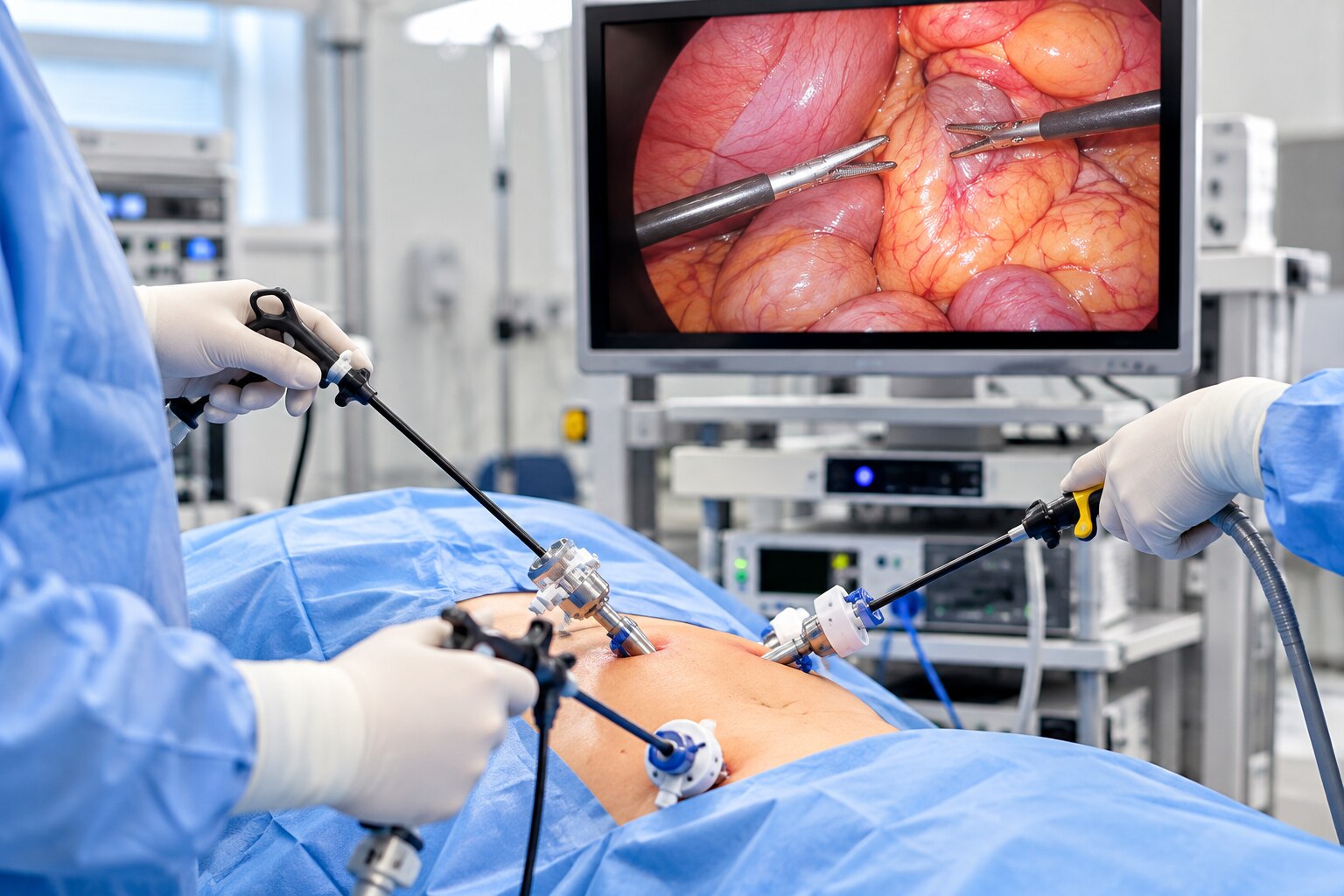
Several small abdominal incisions can cause less abdominal-wall pain, smaller scars and less movement-related discomfort than one larger open-surgery incision. Wound care is usually simpler, and earlier walking can reduce the disruption to bathing, dressing and routine tasks.
| Option | Incision and early recovery | Practical effect |
|---|---|---|
| Laparoscopy | Several small cuts; less wound pain and smaller scars | Earlier walking, easier light activities and a shorter stay when you can eat, urinate, move safely and control pain |
| Open surgery | One larger incision; more abdominal-wall strain and wound care | More discomfort with coughing, standing and turning, with a longer recovery in many comparable operations |
These gastrointestinal surgery recovery benefits do not make the operation minor. Internal tissues still need to heal after bowel, stomach or another organ is repaired or removed; pain, infection, bleeding, blood clots, leakage, ileus and lifting restrictions remain possible.
Your hospital stay and return to desk work or household activities depend on the operation, health, pain control and complications—not the incision count alone.
The main benefits of laparoscopic gastrointestinal surgery in Dombivli are short-term recovery gains. Long-term digestion depends mainly on the disease treated and the bowel, stomach or other organ changed, not on whether the surgeon used small or large access wounds.
Which gastrointestinal operations suit laparoscopy, and when is open surgery safer?
Gallbladder removal, appendectomy, inguinal or abdominal hernia repair, colorectal operations, and selected stomach or small-bowel procedures commonly suit a laparoscopic approach. Colorectal laparoscopy can provide comparable cancer-control outcomes in suitable cases, but a locally advanced tumour is a different decision.
Suitability depends on the diagnosis, previous abdominal operations, adhesions, inflammation, tumour extent, anatomy, obesity, cardiopulmonary fitness and the surgeon’s ability to perform safe open surgery if needed. Search terms such as “minimally invasive digestive surgery dombivli” and “benefits of laparoscopic gastrointestinal surgery dombivli” cannot determine whether your operation is appropriate.
| Laparoscopy | Open surgery |
|---|---|
| Several small abdominal incisions | One larger incision |
| Less abdominal-wall pain and smaller scars | More wound-care and movement-related discomfort |
| Earlier walking and daily activity when recovery is uncomplicated | Longer healing when the larger incision limits movement |
| May offer a shorter hospital stay | May be necessary for complex or extensive disease |
Open surgery may be safer for unstable bleeding, extensive infection, dense adhesions, advanced cancer, difficult anatomy or disease that cannot be removed through the planned laparoscopic access. Severe cardiopulmonary limitations can also make carbon-dioxide insufflation or prolonged positioning unsafe.
The surgeon may convert to open surgery if bleeding cannot be controlled, anatomy cannot be identified, adhesions block safe access or advanced disease prevents complete removal. Conversion is a safety decision, not automatically a complication or failure. Ask what findings could trigger conversion and whether the team can provide open surgery immediately.
What happens during the first 24 hours and first week of recovery?
During the first 24 hours, the recovery plan targets comfort and safe movement rather than opioid-only pain relief. Multimodal treatment may combine paracetamol, an anti-inflammatory medicine when safe, local anaesthetic and limited opioids. Nurses monitor blood pressure, breathing, urine output, nausea and bowel activity.
1. Use the breathing exercises taught by your team, then sit up, stand and take short assisted walks. Movement improves lung function and reduces blood-clot risk; compression devices, stockings or an anticoagulant may add protection when prescribed.
2. Expect shoulder-tip or upper-abdominal discomfort even when the skin wounds are tiny. Carbon dioxide used to create working space can irritate the diaphragm after surgery, causing referred pain that differs from incision pain.
3. Start with sips or clear liquids, then advance to more substantial food when nausea, bowel function and the operation permit. After colorectal or other bowel surgery, the team watches more closely for ileus, leakage, vomiting, abdominal swelling and poor food tolerance.
4. Keep dressings and wounds clean and dry, and shower only when instructed. Ask the surgical team before removing a dressing, applying antiseptic or changing wound care.
During the first week, walking, hydration, prescribed pain control and wound checks remain central. Enhanced-recovery pathways can support earlier eating and mobilisation, but the operation and your condition set the pace. Discharge is safe only when you can manage essential needs, not because internal healing is complete.
These are practical gastrointestinal surgery recovery benefits, not a guarantee of rapid recovery.
When can you work, drive, exercise and lift after discharge?
Recovery is procedure-sensitive, not a fixed promise. The gastrointestinal surgery recovery benefits of laparoscopy may support earlier movement, but an uncomplicated appendectomy or hernia repair usually follows a shorter path than colorectal, stomach or small-bowel surgery. A laparoscopic surgery hospital in Dombivli East should give you operation-specific limits before discharge.
1. During the first 24 hours, arrange supervision rather than staying alone. Take prescribed pain medicines, make short assisted walks, practise breathing exercises, and watch for nausea, vomiting, urine output and bowel activity. Do not drive or make important decisions while affected by anaesthesia or sedating medicines.
2. During the first week, prioritise walking, hydration, wound checks and gradually increasing light daily tasks. Rest when fatigue rises. Contact the surgical team if pain worsens, vomiting persists, fever develops, or the wound becomes increasingly red or wet.
3. Return to desk work when pain is controlled, you can concentrate, and fatigue does not prevent a full work period. The timing depends on the operation and your progress, so do not use an uncomplicated recovery as a promise for larger bowel or stomach surgery.
4. Drive only when you can sit comfortably, turn fully, and brake hard without pain, and when you have stopped sedating pain medicine. Progress from walking to exercise cleared by your surgeon.
Keep heavy lifting restricted until the abdominal wall and internal tissues heal; discharge means home recovery is safe, not that every tissue has healed.
How do you weigh safety, warning signs and the right surgical team?
A safer consultation weighs procedure-specific risks, suitability and the rescue plan, not just the label “minimally invasive.” Laparoscopy can cause bleeding, infection, bowel or nearby-organ injury, blood clots, anaesthesia complications, and carbon-dioxide-related shoulder or upper-abdominal symptoms.
The surgeon may convert to open surgery if bleeding, anatomy, dense adhesions or advanced disease cannot be managed safely; that is a safety decision, not automatically a failure.
Ask these questions before consenting:
- What exact operation will you perform, why is laparoscopy suitable for my diagnosis, and what findings would make open surgery safer?
- What is my chance of conversion, expected hospital stay, pain-control plan and diet progression?
- When can I shower, lift, drive and return to work, and which restrictions continue after discharge?
- Who do I contact day or night if recovery changes, and which symptoms require urgent assessment?
Earlier discharge is appropriate only when you can drink or eat as advised, pass urine, walk, control pain with the planned medicines and show no concerning signs. Seek urgent medical advice for fever, worsening abdominal pain, persistent vomiting, jaundice, increasing wound redness or discharge, breathlessness, chest pain, or inability to pass stool or gas.
Patients comparing a laparoscopic surgery hospital in Dombivli East or researching minimally invasive digestive surgery Dombivli providers can use these questions with Aurindam Hospital or another team. Diagnosis, fitness and access to safe open surgery matter more than location.
Frequently asked questions
What recovery benefits can laparoscopy offer compared with open surgery?
Laparoscopy uses several small incisions instead of one large abdominal incision. This often reduces abdominal-wall pain, scar size and movement-related discomfort, simplifies wound care and supports earlier walking.
Which gastrointestinal operations suit laparoscopy, and when is open surgery safer?
Laparoscopy is used for many planned gallbladder, appendix, reflux, hernia, bowel and colorectal operations. Open surgery can be safer with extensive scarring, uncontrolled bleeding, widespread disease, a very large mass or a need for rapid access.
What happens during the first 24 hours and first week of recovery?
Expect monitoring, pain control, fluids, gradual eating and assisted walking during the first 24 hours. During the first week, protect the incisions, walk regularly, follow diet instructions and attend the scheduled review.
When can you work, drive, exercise and lift after discharge?
The timing depends on the operation, your job and your surgeon’s instructions. Resume driving only when you are off opioid pain medicine and can brake, turn and react without significant pain; increase exercise gradually and avoid heavy lifting until cleared.
What warning signs require medical advice after laparoscopic gastrointestinal surgery?
Contact your surgical team for worsening or severe pain, fever, repeated vomiting, increasing abdominal swelling, inability to pass urine or stool, wound redness or drainage, chest pain or shortness of breath.
Keywords