Kidney stones are a common urinary tract condition that can cause intense pain and interfere with daily life. While some small stones pass naturally with medication and hydration, larger or stubborn stones may require medical intervention. Laser surgery for kidney stone in Badlapur has become one of the most advanced and effective treatment options for removing stones with minimal discomfort and faster recovery.
Modern laser technology allows urologists to break kidney stones into tiny fragments without making large surgical incisions. For many patients, this minimally invasive procedure reduces hospital stay, lowers the risk of complications, and helps them return to normal activities much sooner than traditional surgery.
What Are Kidney Stones?
Kidney stones are hard deposits made of minerals and salts that form inside the kidneys. They can vary greatly in size, from tiny crystals to stones large enough to block the urinary tract.
Several factors contribute to kidney stone formation, including:
- Inadequate water intake
- High salt consumption
- Excessive intake of oxalate-rich foods
- Family history of kidney stones
- Recurrent urinary tract infections
- Obesity
- Certain metabolic disorders
Not everyone with kidney stones experiences symptoms immediately. Some stones remain unnoticed until they begin moving through the urinary tract.
Common Symptoms of Kidney Stones
The symptoms often depend on the size and location of the stone.
Typical signs include:
- Severe pain in the back or side
- Pain radiating toward the lower abdomen or groin
- Burning sensation during urination
- Blood in the urine
- Frequent urge to urinate
- Nausea and vomiting
- Fever with chills if infection is present
Persistent pain or fever should never be ignored, as these may indicate urinary obstruction or infection requiring urgent medical attention.
When Is Laser Surgery Recommended?
Not every kidney stone requires surgery. Doctors first evaluate the size, location, and composition of the stone before deciding on treatment.
Laser surgery is often recommended when:
- Stones are too large to pass naturally
- Medication fails to relieve symptoms
- There is urinary blockage
- Recurrent infections occur
- Persistent severe pain affects daily life
- Kidney function is at risk
- Multiple stones are present
The urologist determines the most suitable treatment after reviewing imaging studies and laboratory investigations.
How Laser Kidney Stone Surgery Works
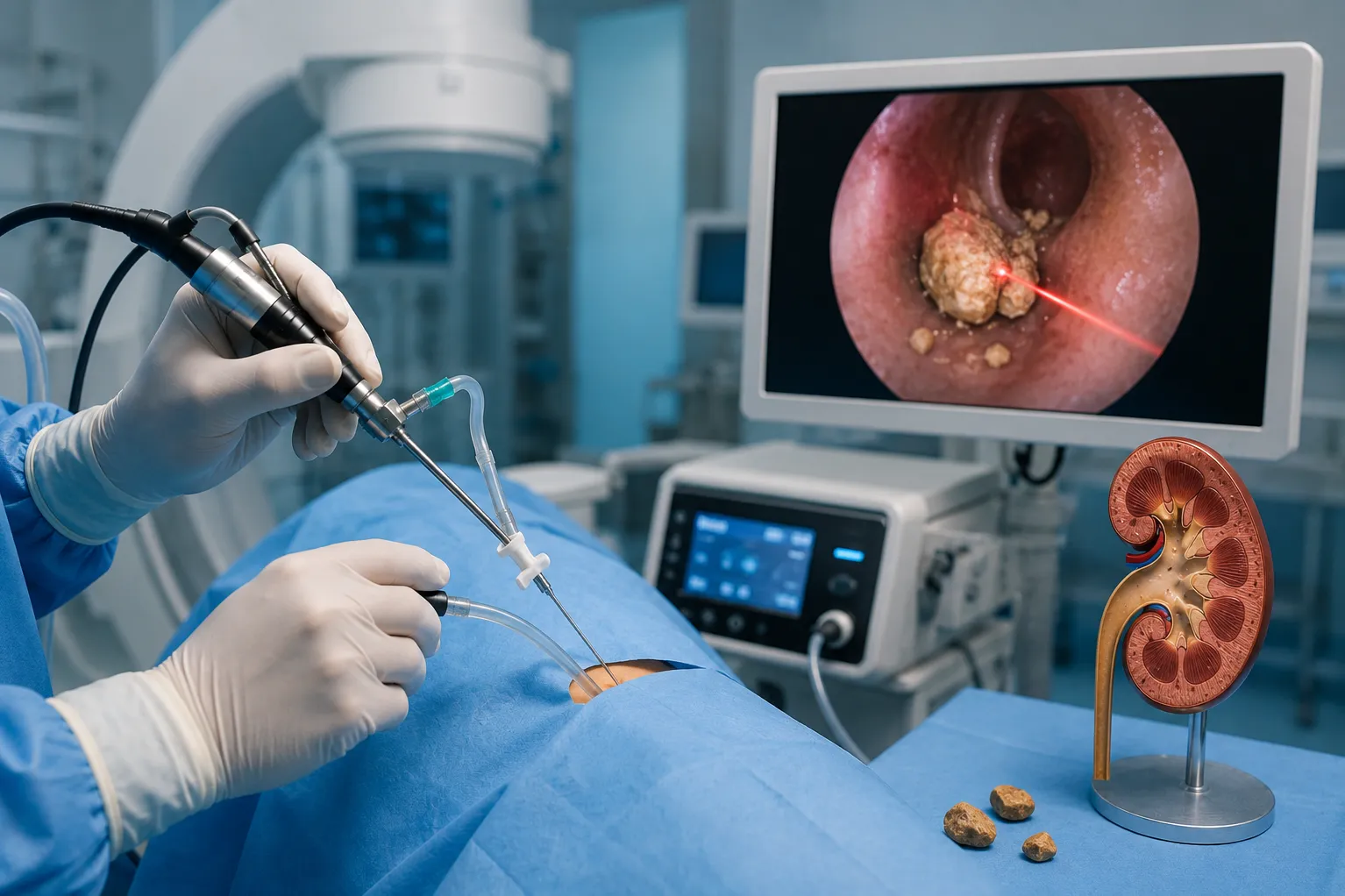
Laser stone removal is commonly performed using a minimally invasive procedure known as ureteroscopy with laser lithotripsy.
During the procedure:
- A thin instrument called a ureteroscope is passed through the natural urinary passage.
- The surgeon locates the stone using a small camera.
- A laser fibre breaks the stone into fine particles.
- Tiny fragments are either removed or allowed to pass naturally through urine.
Since there are no large external incisions, patients generally experience less postoperative discomfort and quicker recovery.
Benefits of Laser Stone Removal
Laser technology has become a preferred treatment because it offers several advantages over traditional surgical approaches.
Some important benefits include:
- Minimally invasive procedure
- No large surgical cuts
- High precision stone fragmentation
- Reduced bleeding
- Lower infection risk
- Shorter hospital stay
- Faster return to normal activities
- Suitable for stones in different parts of the urinary tract
The exact benefits vary depending on the patient's medical condition and the size of the stone.
Recovery After the Procedure
Recovery is generally smooth, although mild discomfort during urination or slight blood in the urine may occur temporarily after treatment.
Doctors usually recommend:
- Drinking plenty of water
- Taking prescribed medications
- Avoiding strenuous activity for a few days
- Following dietary advice
- Attending scheduled follow-up appointments
Patients should seek medical attention if they develop persistent fever, severe pain, heavy bleeding, or difficulty passing urine after the procedure.
Preventing Kidney Stones from Returning
Even after successful treatment, lifestyle modifications play an important role in reducing the likelihood of future stones.
Preventive measures include:
- Staying well hydrated throughout the day
- Limiting excessive salt intake
- Maintaining a balanced diet
- Reducing foods that contribute to stone formation when advised
- Managing underlying metabolic conditions
- Undergoing regular follow-up if there is a history of recurrent stones
Preventive care is often just as important as treatment itself.
Choosing the Right Hospital for Laser Surgery in Badlapur
Patients considering laser kidney stone treatment should look for hospitals with experienced urologists, advanced endoscopic equipment, modern diagnostic facilities, anaesthesia support, emergency services, and postoperative care.
Hospitals offering multidisciplinary healthcare are also better prepared to manage patients with diabetes, hypertension, or other medical conditions that may influence surgical planning and recovery.
For residents of Badlapur and nearby areas of Maharashtra, access to comprehensive urology services within a multi-speciality hospital provides timely diagnosis and coordinated treatment.
Aurindam Hospital offers advanced healthcare services supported by experienced specialists, modern diagnostic technology, surgical expertise, intensive care facilities, and multidisciplinary medical care. Patients requiring evaluation and treatment for kidney stones benefit from an integrated approach that focuses on accurate diagnosis, minimally invasive treatment options, and comprehensive postoperative support.
Kidney stones should never be ignored, especially when symptoms become severe or recurrent. Early diagnosis, expert medical evaluation, and access to modern laser treatment can relieve pain, protect kidney function, and help patients return to their normal lives with greater comfort and confidence.
Keywords