
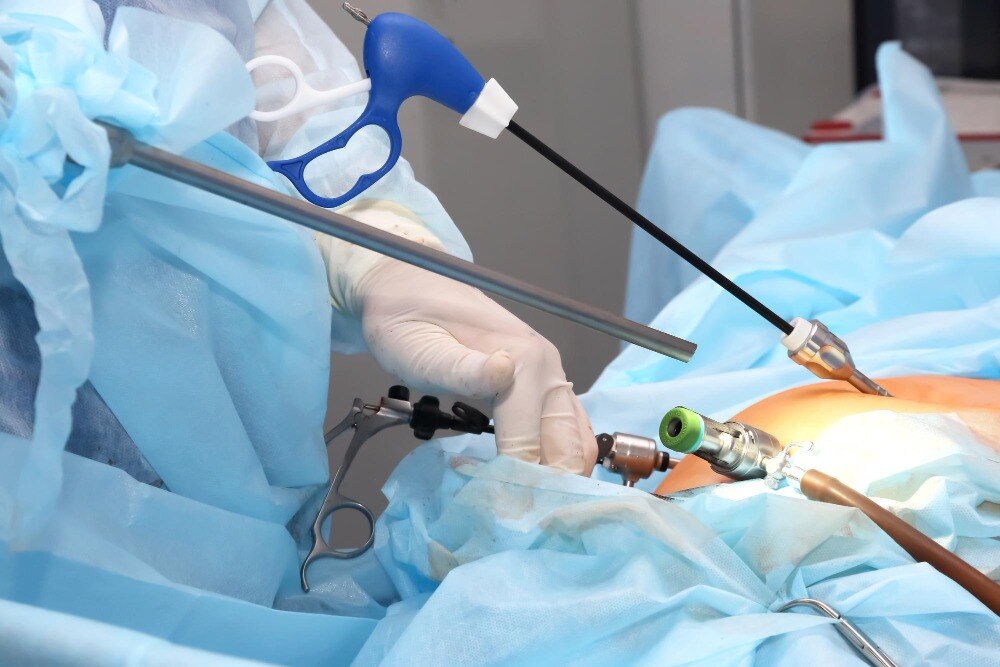
An ovarian cyst does not automatically require an operation. Your decision depends on the cyst’s ultrasound appearance, size and growth, your symptoms, menopausal status, cancer risk, fertility plans and whether an emergency such as torsion or rupture is developing. By the end, you will know when observation is reasonable, what surgery involves and how to compare care options near Kalyan.
Key takeaways
- Observe many simple cysts under 5 cm before menopause.
- Repeat ultrasound and symptom review for simple cysts measuring 5–7 cm.
- Complex features, persistent symptoms, or growth can raise surgical concern.
- Cystectomy preserves ovarian tissue; oophorectomy removes the ovary when necessary.
When does an ovarian cyst need surgery rather than observation?
Most ovarian cysts do not need surgery. Before menopause, a simple cyst smaller than 5 cm is commonly observed without follow-up; one measuring 5–7 cm is usually reassessed with repeat pelvic, often transvaginal, ultrasound and symptom review. A cyst above 7 cm needs further imaging or surgical assessment, but size alone does not mandate removal.
| Finding | Usual next step | Why |
|---|---|---|
| Simple cyst, under 5 cm, no symptoms | Observation | Many functional cysts disappear |
| Simple cyst, 5–7 cm | Repeat ultrasound | Confirms whether it shrinks or persists |
| Cyst over 7 cm or growing on scans | Specialist assessment | Larger or persistent cysts need better characterisation |
| Solid areas, papillary projections, thick septations, blood flow or ascites | Surgical or cancer-team assessment | These features are more concerning than size alone |
| Severe sudden one-sided pain with vomiting, fainting, fever or abdominal distension | Emergency assessment | Torsion, rupture or internal bleeding can threaten health and ovarian blood supply |
Persistent pain, pressure, abnormal bleeding or a cyst that remains after several menstrual cycles also shifts the decision toward surgery. CA-125 can support assessment but cannot diagnose or exclude cancer by itself; interpret it alongside age, symptoms and ultrasound findings.
If surgery is advised, ask whether laparoscopic cystectomy can remove the cyst while preserving ovarian tissue, especially if fertility matters. For laparoscopic surgery for ovarian cyst near Kalyan, choose a team that can manage urgent torsion, examine specimens properly and convert to open surgery when safety requires it.
How do ultrasound findings and symptoms change the level of risk?
A larger cyst is more likely to cause pressure, twisting or rupture, but size alone does not establish cancer. Before menopause, a simple cyst under 5 cm commonly needs no follow-up; one measuring 5–7 cm is commonly rechecked by ultrasound, while a cyst above 7 cm may need further imaging or surgical assessment.
Growth on repeat scans increases concern.
Ultrasound findings that raise the risk level include:
- A solid area inside the cyst
- Thick or irregular septations, meaning internal dividing walls
- Papillary projections growing from the cyst wall
- Blood flow within a solid or papillary part on Doppler imaging
- Ascites, or free fluid in the abdomen
- A complex appearance that becomes larger or more irregular over time
A simple, thin-walled, fluid-filled cyst is less concerning than a complex cyst with these features. A mobile or large cyst also has more opportunity to twist the ovary, although ultrasound cannot always confirm torsion.
Seek urgent assessment for sudden severe one-sided pelvic pain, especially with nausea or vomiting. Fainting, marked weakness, fever, increasing abdominal swelling or pain after a sudden onset can indicate torsion, rupture or internal bleeding. Torsion can cut off the ovary’s blood supply and may require emergency laparoscopy.
CA-125 cannot diagnose cancer by itself. Endometriosis, fibroids, menstruation, pelvic infection and pregnancy can raise it, while a normal result does not exclude cancer; doctors interpret it with your age, symptoms and ultrasound findings.
Which operation is right: cystectomy or oophorectomy?
Cystectomy is preferred when the cyst can be separated from healthy ovarian tissue; oophorectomy is chosen when the ovary cannot be preserved safely or cancer is a serious concern. Your age, fertility plans, the cyst’s appearance, bleeding, ovarian tissue remaining and the condition of the opposite ovary all affect the decision.
| Option | What it means | When it applies |
|---|---|---|
| Cystectomy | Removes the cyst and preserves the ovary | A benign-appearing cyst has separable borders and usable ovarian tissue remains |
| Oophorectomy | Removes the affected ovary | The ovary is extensively damaged, bleeding cannot be controlled, or the cyst is strongly suspicious |
| Open surgery or oncology referral | Uses a larger incision and planned staging | The cyst may be malignant, very large, difficult to remove without rupture, or unsuitable for safe laparoscopy |
Ask an ovarian cyst surgeon near Kalyan how much normal ovary is expected to remain. Cystectomy can reduce ovarian reserve, particularly after repeated surgery or removal of substantial tissue; removing one ovary does not usually prevent pregnancy if the remaining ovary and fallopian tube work normally.
Laparoscopy is unsuitable when suspected cancer requires careful removal without spillage and formal staging, or when the cyst’s size, adhesions, bleeding or the patient’s condition makes keyhole access unsafe. A laparoscopic ovarian cyst removal specimen must go for histopathological examination because its appearance alone cannot reliably exclude borderline or malignant disease.
A planned open operation or gynaecological oncology referral is safer than converting an unsuitable case midway.
What happens during laparoscopic cyst surgery and recovery?
General anaesthesia keeps you unconscious and pain-free while an anaesthesia team monitors your breathing, blood pressure and heart rate. The surgeon makes two to four small abdominal incisions, fills the abdomen with carbon dioxide, and inserts a camera and narrow instruments through the ports.
The surgeon separates the cyst from healthy ovarian tissue when cystectomy is planned. The cyst is usually placed in a retrieval bag before removal to limit spillage; if preserving the ovary is unsafe, part or all of it may be removed.
A suspicious cyst needs a different plan: referral to a gynaecological oncology team, careful removal without rupture, and sometimes open surgery for staging.
Every removed cyst goes to a laboratory for histopathological examination. Its appearance during laparoscopy cannot reliably distinguish a benign, borderline or malignant growth, so the pathology report determines whether further treatment is needed.
You may go home the same day or stay overnight, depending on the operation, pain control and your health. Expect abdominal soreness, tiredness and shoulder-tip pain from the gas; walking soon after surgery lowers clot risk. Avoid strenuous activity until your surgeon clears you.
Contact the hospital urgently for worsening pain, heavy bleeding, fever, repeated vomiting, breathlessness, a swollen abdomen or inability to pass urine. Recognised complications include bleeding, infection, anaesthetic problems, blood clots, and injury to the bowel, bladder, ureter, blood vessels or another organ. The surgeon may convert to open surgery if safety requires it.
How should you compare laparoscopic gynaecology services near Kalyan?
Distance is a weak selection criterion when an ovarian cyst has torsion, bleeding, or suspicious features. Compare laparoscopic gynaecology Kalyan services by the surgeon’s experience, the hospital’s backup and the emergency plan.
| Service | Questions to ask | Why it matters |
|---|---|---|
| Surgeon | Who will perform the operation? How often do they perform laparoscopic cystectomy and oophorectomy? How will you preserve ovarian tissue if fertility matters? | Repeated surgery or removal of normal tissue can reduce ovarian reserve. Discuss the possibility of removing one ovary and its effect on future pregnancy. |
| Hospital | Is a trained anaesthesia team available? Can the operation change to open surgery? Is inpatient care, blood transfusion and intensive monitoring available? | Bleeding, difficult anatomy or cancer concern can make a longer operation or admission necessary. |
| Specimen and cancer care | Will every removed cyst undergo histopathology? Who explains the report? What happens if it shows a borderline or malignant tumour? | Laparoscopy cannot reliably identify every cancer by appearance alone. |
| Emergency care | Can you assess sudden severe pain, vomiting, fainting, fever or abdominal swelling immediately? Is urgent laparoscopy available? | Torsion can cut off ovarian blood supply, while rupture can cause bleeding. |
Ask Aurindam Hospital who leads the case, where pathology is performed and what happens after hours before scheduling treatment. If severe one sided pain or fainting is happening now, seek emergency assessment rather than comparing elective appointments.
Related services
Laparoscopic Gynecology refers to the use of minimally invasive keyhole surgery techniques to diagnose and treat gynecological conditions. View service → |
Laparoscopic and Gastrointestinal Surgeries Laparoscopic and Gastrointestinal Surgeries Laparoscopic Surgery (also called Minimally Invasive Surgery): Laparoscopic surgery is a surgical technique where operations are performed through... View service → |
Frequently asked questions
When does an ovarian cyst need surgery rather than observation?
Many simple cysts under 5 cm before menopause are observed. A 5–7 cm cyst usually needs repeat pelvic, often transvaginal, ultrasound and symptom review. A cyst above 7 cm needs further imaging or surgical assessment. Surgery becomes more likely when the cyst causes persistent pain, bleeding, pressure, complications, grows, persists, or has suspicious imaging features.
How do ultrasound findings and symptoms change the level of risk?
A thin-walled, fluid-filled simple cyst is generally less concerning than a cyst with solid areas, thick septations, papillary projections, irregular walls, or internal blood flow. Severe sudden pain with vomiting can indicate torsion, while sudden pain with weakness or fainting can indicate rupture or bleeding and needs urgent medical assessment.
Which operation is right: cystectomy or oophorectomy?
Cystectomy removes the cyst while preserving the ovary and is preferred when ovarian tissue can be safely retained. Oophorectomy removes the affected ovary and may be considered when the cyst has replaced or severely damaged the ovary, torsion has caused nonviable tissue, or cancer is a concern.
What happens during laparoscopic ovarian cyst surgery and recovery?
Under general anaesthesia, the surgeon inserts a camera through a small abdominal incision, places instruments through additional ports, removes the cyst or ovary, and sends tissue for laboratory examination. Recovery depends on the procedure and findings; ask when you can walk normally, return to work, drive, exercise, and seek help for fever, worsening pain, heavy bleeding, or wound problems.
How should you compare laparoscopic gynaecology services near Kalyan?
Ask who will perform the operation, whether the surgeon regularly treats ovarian cysts laparoscopically, how ultrasound images and tumour-marker results will be reviewed, what happens if open surgery becomes safer, whether an anaesthetist and emergency support are available, and how pathology, follow-up, and complications are handled.
Related service
Gynaecology Obstretics & Reproductive Medicine Gynaecology Obstretics & Reproductive Medicine Gynecology is the branch of medicine that focuses on the health of the female reproductive system (non-pregnant women). View service → |
Keywords